
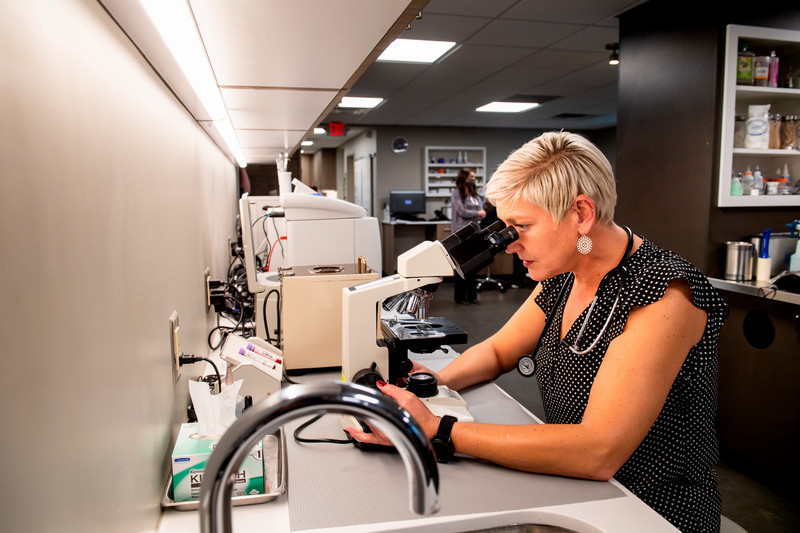
Diagnostic testing plays a vital role in understanding your pets health.
Early detection allows us to identify concerns sooner, improve treatment outcomes, and establish baseline information for future care.
As a pet parent, you may notice when something “isn’t quite right” with your pet, but determining the cause is not always straightforward. That is where diagnostic testing comes in. At Upper Arlington Veterinary Hospital, our veterinary team is committed to providing a complete picture of your pets health through advanced laboratory and diagnostic services, helping us make informed decisions and deliver the best possible care.
Related Services
From preventative screenings to sophisticated diagnostics.
Blood & Lab Tests
Knowing when your pet is unwell is one of the most challenging parts of pet care. Annual blood and lab tests help determine a normal baseline for your pet's health. Monitoring these results over time allows us to diagnose problems early, increasing the likelihood of timely intervention and recovery so your pet can live their best life.
Endoscopy
Endoscopy is a minimally invasive procedure that uses a small camera to examine the inside of your pet’s body. It allows evaluation of areas such as the esophagus, stomach, intestines, and, in some cases, the airway. Endoscopy may be recommended to investigate ongoing symptoms like vomiting, weight loss, or chronic coughing, and in certain situations, to retrieve foreign objects. Because it is minimally invasive, most pets experience less discomfort and a relatively quick recovery.
Tonometry
Tonometry is a quick, non-invasive test used to measure the pressure inside your pet’s eyes. Abnormal eye pressure can be associated with conditions such as glaucoma or inflammation within the eye. This simple procedure is typically well tolerated and can usually be performed during a routine exam without the need for sedation.
Ultrasound
Ultrasound is a non-invasive imaging tool that allows us to view your pet’s internal organs in real time. It is commonly used to evaluate abdominal structures such as the liver, kidneys, bladder, intestines, and spleen. In other situations, ultrasound may also be used to assess the heart or look for fluid within the chest or abdomen. This imaging tool provides detailed information about soft tissues and is often used alongside other diagnostics to help guide diagnosis and treatment planning.

Cookies on this website are used to both support the function and performance of the site, and also for marketing purposes, including personalizing content and tailoring advertising to your interests. To manage marketing cookies on this website, please select the button that indicates your preferences. More information can be found in our privacy policy here.